Rome Travel Guide: Where to Stay, What to Do and How to Plan
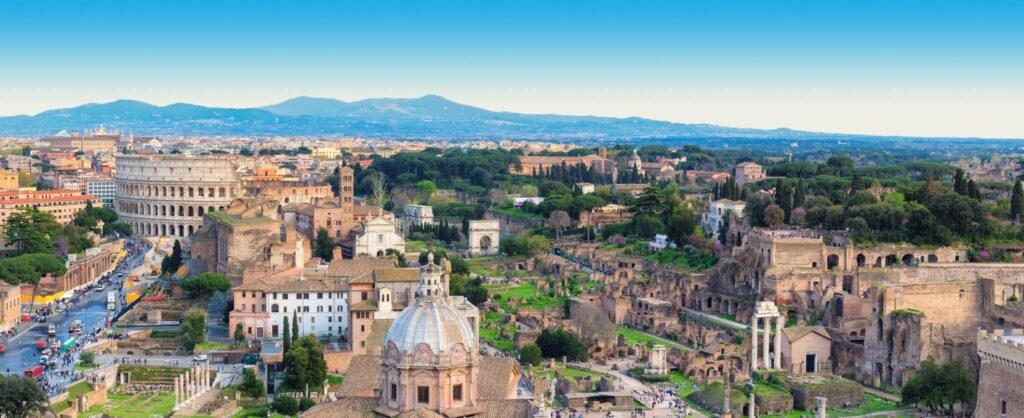
Rome is easier to enjoy when you stop trying to see everything at once. Instead, take your time wandering the cobblestone streets and lingering over espresso at a corner café. Let the city unfold at its own gentle pace. After all, the true magic of the Eternal City is found in the moments between the monuments.
Rome is the kind of city that makes you feel history under your feet. Ancient ruins sit next to buzzing piazzas, carbonara is a daily ritual, and every corner seems designed for a perfect photo. Whether it’s your first visit or your fifth, this guide gives you everything you need to plan a smooth, memorable trip in 2026 — without the overwhelm.
This Rome travel guide will help you choose a neighbourhood, decide which experiences deserve a place in your itinerary, understand your transport options and put together a realistic budget.
Ad disclosure: This page contains affiliate advertising. We may earn a commission on qualifying bookings or purchases through links and boxes marked “Ad”. Your booking is completed with the named provider under its terms.
Rome at a Glance
| Planning question | Our starting recommendation |
|---|---|
| How many days should you allow? | 3 full days for a selective first visit; 4 or 5 for a slower pace. Treat arrival and departure days separately. |
| What should you prioritise? | Choose between ancient history, major art collections, neighbourhood exploring and food experiences rather than giving every interest equal time. |
| Which area should you stay in? | Start by comparing the historic centre, Monti and Prati against the places you most want to visit. |
| How should you organise each day? | One major ticketed attraction, a nearby neighbourhood and enough time for meals and transport. |
| What is the biggest planning mistake to avoid? | Booking several tightly timed activities without allowing for security checks, walking and delays. |
These are planning suggestions, not a requirement to follow a particular route. A trip built around your interests will be more rewarding than a checklist designed for somebody else.
Our suggested starting point: allow three full sightseeing days, choose accommodation around your priorities, and organise your must-see attractions before filling the gaps.
Best Time to Visit Rome
Rome works year-round, but the experience changes dramatically by season. For a walking-focused trip, spring and autumn are sensible starting points.
Rome’s tourism board identifies these seasons as particularly suitable for visiting, while July and August are generally hotter. Rain is another consideration, particularly in the wetter months. Planning accordingly ensures you avoid the heavy downpours and make the most of your stay.
| Season | Benefits | How we would approach the trip |
|---|---|---|
| Spring (Mid-April to mid-May) | Comfortable temperatures (18–25°C), longer days, fewer extreme crowds, and better hotel rates. | Plan outdoor sightseeing, but check your dates against religious holidays and individual attraction calendars. |
| Summer (June–August) | Long days and outdoor dining, but hot (often 32–35°C+), very crowded, and prices peak. Many Romans leave in August (Ferragosto). | Keep outdoor visits earlier in the day where possible, allow a substantial midday break and check that your accommodation has air conditioning. |
| Autumn (mid-September to mid-October) | Comfortable temperatures (18–25°C), longer days, fewer extreme crowds, and better hotel rates. | Build a walking itinerary with an indoor alternative for rainy periods. |
| Winter (November–March) | Cooler (8–15°C), fewer tourists, and the lowest prices. Christmas markets and New Year are atmospheric; just pack layers and a rain jacket. | Leave more flexibility for weather and check seasonal attraction hours before committing to afternoon visits. |
| Avoid if possible: | The week around Easter and mid-August (extreme heat + many local businesses closed). |
Best overall (shoulder seasons): Mid-April to mid-May and mid-September to mid-October. Comfortable temperatures (18–25°C), longer days, fewer extreme crowds, and better hotel rates.
Quick tip: Book major attractions (Colosseum, Vatican Museums, Borghese Gallery) 2–4 weeks ahead in shoulder season and even earlier in peak summer.
Rather than choosing dates on the assumption that a whole season will be cheaper, compare the combined cost of flights and accommodation across a few possible stays.
A less expensive flight is not necessarily a saving when the room costs more. Always look at the total package to ensure you are truly getting the best deal.
[Internal link: Best Time to Visit Rome — Weather, Crowds and Planning Tips.]
Top Places & Regions to Visit
Rome is best experienced by neighbourhood rather than a long checklist.
- Ancient Rome — Colosseum, Roman Forum & Palatine Hill (the classic trio on one ticket).
- Centro Storico — Pantheon, Piazza Navona, Trevi Fountain, and the maze of lanes between them.
- Vatican City — St. Peter’s Basilica and the Vatican Museums (including the Sistine Chapel).
- Trastevere — Cobblestone streets, ivy-covered buildings, and some of the city’s best evening atmosphere.
- Monti — Trendy, local-feeling neighbourhood right next to the Colosseum with vintage shops and wine bars.
- Prati — Elegant, quieter area next to the Vatican — great for families or a calmer base.
- Testaccio — Foodie favourite with authentic markets and trattorias (less touristy).
Many of the best experiences can be booked as guided tours or skip-the-line tickets.
[Optional: Insert small GetYourGuide or Viator carousel of 3 popular Rome experiences with live prices & ratings]
How Many Days Do You Need?
- 3 days — Perfect for first-timers. Covers the big hits (Colosseum + Forum, Vatican, Centro Storico highlights) at a comfortable pace.
- 4–5 days — Ideal. Adds neighbourhood wandering, a food tour or cooking class, and one day trip (Ostia Antica or Tivoli).
- 7 days — Allows slower exploration, multiple day trips, and time to simply sit in a piazza with an aperitivo.
How to Get to Rome and Get Around
Flights
Rome has two airports: Fiumicino (FCO – main international) and Ciampino (CIA – mostly low-cost).
Arriving at Fiumicino Airport
The Leonardo Express links Fiumicino Airport with Roma Termini without intermediate stops. Trenitalia lists a journey time of 32 minutes and a standard one-way fare of €14. Ordinary integrated Metrebus tickets are not valid on this service.
[Insert Aviasales / Travelpayouts Flight Search Widget]
Airport to city
- Leonardo Express train from Fiumicino to Termini: ~32 minutes, €14.
- Taxi fixed fare from Fiumicino to central Rome: €50 (official rate).
Getting around the city
Rome is very walkable in the centre. For longer distances use the metro (3 lines), buses, or trams.
- Single ticket (100 minutes): €1.50
- 24/48/72-hour passes available.
- Validate tickets before boarding.
For intercity travel (Florence, Naples, etc.):
[Insert Omio or Trainline search widget / deep link]
Where to Stay in Rome – Best Areas
Choosing the right neighbourhood before choosing the hotel makes a huge difference in Rome.
A property might look excellent in photographs but still be inconvenient for the trip you are planning. Put your must-see places on a map, compare the journeys from each potential base, and check the accommodation’s exact address.
Doing this will save you hours of unnecessary transit time. Always prioritize location over room size. A central spot keeps you close to the action and minimizes your reliance on public transport.
| Area | Best For | Mid-range price range (2026) | Vibe & Notes | Check Prices |
|---|---|---|---|---|
| Centro Storico | First-timers, short stays | €180–320 | Most atmospheric, walk everywhere | [Booking] |
| Monti | Value + location | €120–200 | Trendy, close to Colosseum, local feel | [Booking] |
| Trastevere | Atmosphere & evenings | €140–220 | Charming but can be noisy at night | [Booking] |
| Prati | Vatican & families | €130–200 | Elegant, quieter, good metro | [Booking] |
| Testaccio | Food lovers | €100–160 | Authentic, fewer tourists | [Booking] |
| Esquilino/Termini | Budget & transport | €90–140 | Convenient but less charming | [Booking] |
For a first visit, we would begin by comparing the historic centre for a walking-focused stay, Monti for ancient-history priorities, and Prati for a Vatican-focused itinerary.
Then narrow the shortlist using practical details: the room configuration, lift access, air conditioning, cancellation conditions and the total price for your party.
Recommendation for most first-timers: Centro Storico if budget allows, otherwise Monti.
[Insert Booking.com map widget or hotel search form filtered to Rome]
Budget Overview (Per Person, Per Day – 2026)
| Style | Daily Budget (excl. flights) | What it covers |
|---|---|---|
| Budget | €80–120 | Hostel/private budget room, street food, 1 paid sight, public transport |
| Mid-range | €150–220 | 3-star hotel, trattoria meals, 1–2 sights, some taxis |
| Comfortable | €250–350+ | Boutique hotel, nicer restaurants, guided tours |
Biggest costs: Accommodation and major attraction tickets. Food can be very reasonable if you eat where locals eat (avoid the immediate vicinity of the big monuments).
Find a Stay That Fits Your Itinerary
Once you have chosen an area, enter your actual dates and guest numbers before comparing properties. Check the total for the whole stay rather than judging a hotel by a headline nightly price.
Explore accommodation in Rome on Booking.com — Ad
[Affiliate placement: Insert your approved Rome-specific Booking.com link. Use an accommodation map only if your programme provides an approved integration.]
[Internal link: Where to Stay in Rome — Neighbourhoods and Accommodation Compared.]
Things to Do in Rome
You do not need a paid experience for every part of your trip. We would use guided visits selectively, where explanations or a particular format add something you genuinely value.
1. Explore the Colosseum, Roman Forum and Palatine Hill
Start by deciding which parts of the archaeological site you want to see.
The standard 24-hour Colosseum, Roman Forum and Palatine ticket covers the Colosseum’s first and second levels and the Forum–Palatine area, but not the arena. Arena access is included in specific alternative ticket types. Colosseum admission requires a reserved time, tickets are named, and visitors must have identification available. Official sales open 30 days before the visit. Colosseo
Our recommendation is to allow a substantial part of the day for this group of sights rather than treating the Forum and Palatine as a quick extra.
A guide may be worthwhile when you would appreciate the historical context being explained as you walk. An independent visit is a reasonable alternative when you prefer to read beforehand and control your own pace.
Before booking: Compare the areas included, the duration and whether you are buying admission, an audio guide or a live guided visit. Start with the official ticket options as your reference point. Colosseo
[Internal link: Colosseum Tickets Explained — Standard Entry, Arena Access and Guided Tours.]
2. Visit the Vatican Museums and Sistine Chapel
The Vatican Museums ticket includes the museums and Sistine Chapel. At the time checked, the official full-price ticket was €20, with a €5 reservation charge for online booking. The museums identify their own ticket portal as the official online purchasing channel. Vatican Museums
Give this visit its own space in the itinerary. We would avoid pairing it with another long, tightly scheduled museum visit immediately afterwards.
Choose a guided option for the explanation and route—not simply because a listing uses the words “skip the line”. Read exactly what the booking includes and check the official opening calendar for your date.
Understand the Difference Between the Vatican Museums and St Peter’s Basilica
Ordinary entrance to St Peter’s Basilica is free. The Basilica offers an optional paid booking service that includes a digital audio guide, while visiting the dome requires a separate ticket. Do not assume that a Vatican Museums booking includes these additional services. St. Peter’s Basilica
All visitors must pass through security. The Basilica also requires shoulders and knees to be covered. Build time for these checks into your plans. St. Peter’s Basilica
3. Step Inside the Pantheon
The Pantheon is a good example of why checking current information matters.
The full-price admission fee increased to €7 on 1 July 2026. Official tickets are available through Musei Italiani and at the site. The Ministry of Culture states that visits proceed in arrival order and that there are no “skip-the-line” options. Cultura
Start with standard admission when your main goal is to see the building. Consider paying for commentary or a guided experience only when you value the additional explanation.
We would combine the Pantheon with a leisurely walk through nearby streets rather than scheduling another attraction immediately afterwards.
4. See the Trevi Fountain Without Buying More Than You Need

You can still see the Trevi Fountain without paying.
Since 2 February 2026, most non-resident visitors have needed a €2 ticket to enter the controlled inner area closest to the fountain. Viewing it from outside that area remains free. Exemptions and operating arrangements are listed on the fountain’s official website. Trevi Fountain
Decide whether you actually want closer access. There is no need to purchase a tour or package simply to see the fountain from the surrounding public area.
Avoid building your day around an exact close-up visiting time without checking the current arrangements; maintenance can affect access. Trevi Fountain
5. Leave Time for the Historic Centre and Trastevere
The area around the Pantheon, Piazza Navona and Campo de’ Fiori brings together historic squares, narrow streets, museums and churches. It suits a less structured stretch of sightseeing between major bookings. Turismo Roma
Later, consider an evening in Trastevere. Its lanes, squares, trattorias and taverns make it a useful area to explore around dinner. Turismo Roma
For a starting point on the menu, Rome’s traditional dishes include cacio e pepe and carbonara. You do not need a food tour to try them. A guided food walk is an optional experience for travellers who would enjoy a hosted introduction and several planned stops. Turismo Roma
Before choosing a food experience, check the number of tastings, dietary arrangements, walking involved and whether the inclusions are enough for the meal you are replacing.
6. Make Room for Villa Borghese
For a change of pace, consider a walk in Villa Borghese, a public park with gardens, ponds, monuments and museums. Turismo Roma
The Galleria Borghese is a separate museum visit, not simply another name for the park. Reservations are required for all ticket categories, including free-admission categories. Check its official booking arrangements before adding it to your day. Galleria Borghese
7. Explore Rome With a Guide — Ad
A guided experience makes the most sense when it adds something you would otherwise miss: historical explanation, help navigating a large collection, or a hosted introduction to local food.
[Affiliate widget: Insert one approved GetYourGuide carousel with three verified products: a Colosseum–Forum guided visit, a Vatican Museums–Sistine Chapel guided visit, and a Rome food walk. Let the approved widget supply any displayed prices and ratings.]
Check the itinerary, group size, language and cancellation conditions for the exact departure you select.
[Alternative placement: Use a curated Viator widget instead—not a duplicate carousel immediately below the first.]
8. Find a Stay That Fits Your Itinerary
Once you have chosen an area, enter your actual dates and guest numbers before comparing properties. Check the total for the whole stay rather than judging a hotel by a headline nightly price.
Explore accommodation in Rome on Booking.com — Ad
[Affiliate placement: Insert your approved Rome-specific Booking.com link. Use an accommodation map only if your programme provides an approved integration.]
[Internal link: Where to Stay in Rome — Neighbourhoods and Accommodation Compared.]
More Details on Best Things to Do in Rome : A Complete Guide to the Eternal City.
Practical Essentials for Rome
eSIM Italy
Skip the airport SIM queues. Airalo has reliable plans for Italy starting from around $4.50 for light data.
Travel Insurance
Medical care for non-EU visitors can be expensive. SafetyWing is popular with travellers for flexible monthly plans.
[SafetyWing affiliate link / soft CTA]
Other useful notes
- Tourist tax (€3–7 per person per night) is usually paid at the hotel and not always included in online prices.
- Dress code for churches (including St. Peter’s and the Vatican): shoulders and knees covered.
- Free drinking water from the many “nasoni” fountains around the city.
Suggested Rome Itineraries
Classic 3-Day Rome
- Day 1: Colosseum + Roman Forum + Palatine → Monti in the evening
- Day 2: Vatican Museums + St. Peter’s → Castel Sant’Angelo or Prati
- Day 3: Pantheon → Piazza Navona → Trevi → wander Centro Storico & Trastevere at night
More Details on 3-Days Rome Itinerary.
4–5 Day version
Add a food tour or cooking class, a slower morning in a neighbourhood, and a half-day trip to Ostia Antica or the Appian Way.
Note : Pack Only Essentials and lightly. More details on Rome Packing List
Frequently Asked Questions
Is 3 days enough for Rome?
Yes for the highlights. 4–5 days is more relaxed and rewarding.
Do I need to book the Colosseum and Vatican in advance?
Yes — especially from April to October. Timed entry is now standard.
Is Rome safe?
Generally yes, but watch for pickpockets in crowded areas (metro, major piazzas, around Termini).
What is the best area to stay for a first visit?
Centro Storico or Monti for most people.
Can I drink the tap water?
Yes — Rome’s water is excellent and the public fountains are safe and free.